



To understand the spaces we live
more psychology and feng shui
the double approach East-West
by Enrico Mercatali and Vanessa Passoni
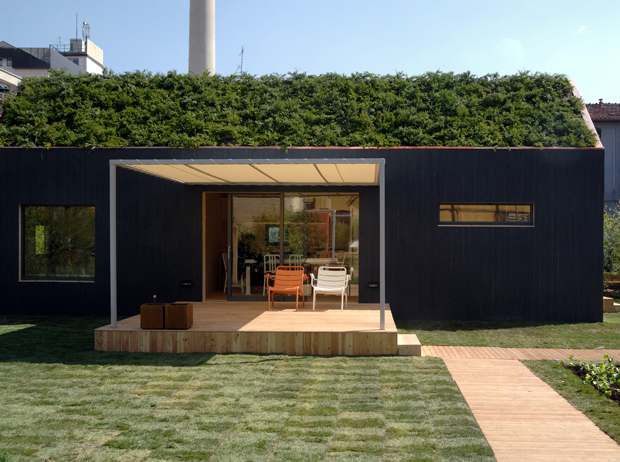
Below: a recent realisation of a domestic space in Higashi-Hiroshima, Japan. The architect (suppose Design Office) has designed the house for a young couple with children; the space has been conceived as a volume fragmented in separate cells, in which the family’s main functions are made autonomous and enhanced in their fundamental features, through an intermediate space called “Doma”, made of clay, in the balance between public and private, inside and outside. A bizarre realisation, which is the result of a collaboration between the designer’s fantasy and the buyer’s needs. The cover images of each article of the column will be selected from Taccuini, among the projects of architecture and interior furniture that offer the most interesting and innovative solutions as opposed to the archetypes of tradition.

more
Psychology and Feng-shui
Psychology and Feng-shui
to understand the spaces we live

and better evaluate their holds
on our behaviours, mood, thoughts, health

Taccuini Internazionali begins a column dedicated to the architecture of the environmental micro-spaces in which we spend some of our time (internal or external, private or public, commercial or cultural, for work and for fun, housing or not). Our idea is to propose to the public our analysis, as much objective and as little trendy as possible, of these places and their features. We aim at showing their qualities and weak points in relation to their effect on the people who attend them, even occasionally, or live in them for a long time or briefly, both because they live, work or simply pass through there.
We are strongly convinced that, now more than ever, everything that is physically built in terms of environment in order to determine some spaces around us (as for architectures and places) is influenced by subjectivity and fashion. That is why we want to suggest to our readers a different approach of knowledge about these topics. This seems to have become a necessity, since it can help us understand, distinguish and realize what is wrapping and containing us, and surely influencing us. Such need is strengthened by a proclivity, which has recently occurred in the philosophical debate too, towards a strong realism in the analysis of all the concrete aspects of our lives: we need to understand how many positive effects can derive from a greater awareness about what we eat, what medicines we ingest, and also about the influence of everything that determines the aspect of our environment.
We think that this kind of approach to the themes of architecture, relevant to the small or big spaces we live, can involve a larger amount of people in a subject that is rarely handled by the individuals in first person, without any contribution of the experts; when it comes to all the issues involving the urban or territorial field, on the contrary, this becomes an “esoteric ” matter, which requires the contribution of people with specific competences. Not that this prevents all the non-experts from being interested in the physical conformation or in the aspect of their environment - whether we are talking about a district, a town or a territory - by adopting any possible mean of communication to draw the attention of those who are in some way responsible for its changes in the course of time.
It’s obvious that the environment in which we live and with which we are in contact the most has to be controlled the most, and it’s therefore useful to know the laws that govern its structure and aspect. The goal is to make it become congenial as much as possible, from the point of view of our physical but also mental health, since it must act positively on our mind, by bringing us satisfaction and keeping us away from stress and feelings of constriction.
We are convinced that very little attention has been given in the past to these problems, handled only by those who are numbered in books and manuals among the masters of ancient and modern architecture. Through their genius and the erudition acquired in the course of time, they have shown an ability to control the laws that have been governing everything that is beautiful, harmonic and appropriate for millennia, and they have managed to give to their spaces those qualities that have made them perfect not only from an aesthetic point of view, but also from a larger human perspective, physiological and psychological. Today, very little of what we see is created with this kind of awareness, especially when it comes to a big new building: the common mark is a subjectivity being an end in itself, or even the selfish initials of the artist, whose project didn’t care much about the surroundings or the deep and pure spirit of the place. But it’s only through a careful analysis of it, together with a deep knowledge of the processes and the general laws and principles at the base of its conformation, that we can bring identity and well-being to the ones who live in it.
The history that has contributed to the shape of a place can give a great explanation of it, together with many other factors of the critical praxis normally used in the West. A greater and wider knowledge can also be reached through the cognitive, philosophical and technical approach coming from the East.
Coming back to the topic we intend to deal with, we propose an article in which we analyze a few environments randomly selected, with the collaboration of Vanessa Passoni, scholar of Eastern Philosophy. We will talk about the two distinct paradigms of the western and eastern perspective and the different approach used in the observation of spaces, volumes, openings, spatial schemes determining the habitat, materials, colours and everything that contributes to influence the housing space.
We would be glad if the readers cut in on this theme and proposed in their turn some environments to be analyzed. We think that the use of practical examples can make the understanding process towards a true and useful knowledge of the real even more interesting.
We think that this kind of approach to the themes of architecture, relevant to the small or big spaces we live, can involve a larger amount of people in a subject that is rarely handled by the individuals in first person, without any contribution of the experts; when it comes to all the issues involving the urban or territorial field, on the contrary, this becomes an “esoteric ” matter, which requires the contribution of people with specific competences. Not that this prevents all the non-experts from being interested in the physical conformation or in the aspect of their environment - whether we are talking about a district, a town or a territory - by adopting any possible mean of communication to draw the attention of those who are in some way responsible for its changes in the course of time.
It’s obvious that the environment in which we live and with which we are in contact the most has to be controlled the most, and it’s therefore useful to know the laws that govern its structure and aspect. The goal is to make it become congenial as much as possible, from the point of view of our physical but also mental health, since it must act positively on our mind, by bringing us satisfaction and keeping us away from stress and feelings of constriction.
We are convinced that very little attention has been given in the past to these problems, handled only by those who are numbered in books and manuals among the masters of ancient and modern architecture. Through their genius and the erudition acquired in the course of time, they have shown an ability to control the laws that have been governing everything that is beautiful, harmonic and appropriate for millennia, and they have managed to give to their spaces those qualities that have made them perfect not only from an aesthetic point of view, but also from a larger human perspective, physiological and psychological. Today, very little of what we see is created with this kind of awareness, especially when it comes to a big new building: the common mark is a subjectivity being an end in itself, or even the selfish initials of the artist, whose project didn’t care much about the surroundings or the deep and pure spirit of the place. But it’s only through a careful analysis of it, together with a deep knowledge of the processes and the general laws and principles at the base of its conformation, that we can bring identity and well-being to the ones who live in it.
The history that has contributed to the shape of a place can give a great explanation of it, together with many other factors of the critical praxis normally used in the West. A greater and wider knowledge can also be reached through the cognitive, philosophical and technical approach coming from the East.
Coming back to the topic we intend to deal with, we propose an article in which we analyze a few environments randomly selected, with the collaboration of Vanessa Passoni, scholar of Eastern Philosophy. We will talk about the two distinct paradigms of the western and eastern perspective and the different approach used in the observation of spaces, volumes, openings, spatial schemes determining the habitat, materials, colours and everything that contributes to influence the housing space.
We would be glad if the readers cut in on this theme and proposed in their turn some environments to be analyzed. We think that the use of practical examples can make the understanding process towards a true and useful knowledge of the real even more interesting.
Enrico Mercatali
Feng-Shui
The environment in Yin-Yang’s School of Thought
The environment in Yin-Yang’s School of Thought
Everyone has happened to enter a beautiful room and yet feel physically uncomfortable. The eastern discipline called Feng-Shui studies these uneases and remedies them starting from the foundation, by choosing the right kind of ground for houses, temples, public and imperial buildings. To each typology of house the proper intake of Qi energy, to each rank the specific and adequate natural habitat.
When we use the Feng-Shui criteria for analyzing a western building it is also necessary to consider that the eastern weather conditions are different and so is our way of conceiving the construction. Some materials are easily accessible in the West but not in the East, and vice versa. To an habitat of some kind, materials more practical but less stable in case of displacement; to other habitats a more solid choice, made to last long. But the Feng-Shui discipline uses also some universal ground rules, which observe the course of seasons, of light and obscurity, of the shapes composing a room and their effect on the vitality of Universal and Personal Qi.
The Universal Qi is the energy spontaneusly created in the Universe, towards which everyone is both generated and generative. It flows in the whole planet and we can never avoid it. It comes into our houses, goes across the streets, wanders around the mountains and the great seas, and gathers, then bringing it along, the information of everything it meets. Some places have a conformation that can control its flow, either for their architecture or geographical position, while in other ones it flows with more speed and energy of motion. Starting from the climate until the psychophysical condition of the individual, everything converges in the Qi and derives from it.
The personal Qi is, on the contrary, produced by the collaboration of body and mind.
The more harmony we are able to reach during this introspective process, the better energy we produce and the greater mental and physical efficiency we have at our disposal. The idea comes from the contrast between the forces called Yin and Yang. Two different poles showing similar and specular qualities and being inseparable by nature. Only the presence of Yin can allow the existence of Yang and vice versa, since the energy created by their eternal searching and disowning each other allows their reciprocal appearance. Like two magnets that attract and repel each other at the same time. Thanks to this perpetual motion, the more or less prevailing appearence of one polarity takes place.
A house where structural features are too Yang and the circulating Qi is very strong, will drain with fever the energies of its inhabitants’ Personal Qi and will contribute to create a state of psychological stress. A house whose features are too Yin and whose Qi is weak, on the contrary, will tend to produce physical pathologies linked to a state of depression caused by the excessive stagnation. The difference between the various states of interaction between Yin and Yang allows to suggest some of them for some activities instead of others. A bedroom must have some Yin features at its base, in order to allow the right control and contribution of incoming Yang, and become a real place of complete physical and mental regeneration. When a structural deficiency occurs, an evaluation of the room might be necessary, so that the colours and shapes of the furniture can balance the relation between Universal and Personal Qi.
The greatest eastern Feng-Shui masters walk into houses and analyze on themselfes the effect perceived from the present Qi. They judge if it is too strong, stagnant or mild. The observation and physical perception of different places will help them find a solution to convey it at best.
A round shape, instead of a triangular one, will increase the activity of Yin rather than Yang. The right choice of shapes and sizes, the setting of lights and shadows can create a remarkable difference of comfort if the spaces are handled following these criteria.
In these short analyses we will try to catch the sense of motion and the effects produced by the Qi inside the spaces here proposed.
When we use the Feng-Shui criteria for analyzing a western building it is also necessary to consider that the eastern weather conditions are different and so is our way of conceiving the construction. Some materials are easily accessible in the West but not in the East, and vice versa. To an habitat of some kind, materials more practical but less stable in case of displacement; to other habitats a more solid choice, made to last long. But the Feng-Shui discipline uses also some universal ground rules, which observe the course of seasons, of light and obscurity, of the shapes composing a room and their effect on the vitality of Universal and Personal Qi.
The Universal Qi is the energy spontaneusly created in the Universe, towards which everyone is both generated and generative. It flows in the whole planet and we can never avoid it. It comes into our houses, goes across the streets, wanders around the mountains and the great seas, and gathers, then bringing it along, the information of everything it meets. Some places have a conformation that can control its flow, either for their architecture or geographical position, while in other ones it flows with more speed and energy of motion. Starting from the climate until the psychophysical condition of the individual, everything converges in the Qi and derives from it.
The personal Qi is, on the contrary, produced by the collaboration of body and mind.
The more harmony we are able to reach during this introspective process, the better energy we produce and the greater mental and physical efficiency we have at our disposal. The idea comes from the contrast between the forces called Yin and Yang. Two different poles showing similar and specular qualities and being inseparable by nature. Only the presence of Yin can allow the existence of Yang and vice versa, since the energy created by their eternal searching and disowning each other allows their reciprocal appearance. Like two magnets that attract and repel each other at the same time. Thanks to this perpetual motion, the more or less prevailing appearence of one polarity takes place.
A house where structural features are too Yang and the circulating Qi is very strong, will drain with fever the energies of its inhabitants’ Personal Qi and will contribute to create a state of psychological stress. A house whose features are too Yin and whose Qi is weak, on the contrary, will tend to produce physical pathologies linked to a state of depression caused by the excessive stagnation. The difference between the various states of interaction between Yin and Yang allows to suggest some of them for some activities instead of others. A bedroom must have some Yin features at its base, in order to allow the right control and contribution of incoming Yang, and become a real place of complete physical and mental regeneration. When a structural deficiency occurs, an evaluation of the room might be necessary, so that the colours and shapes of the furniture can balance the relation between Universal and Personal Qi.
The greatest eastern Feng-Shui masters walk into houses and analyze on themselfes the effect perceived from the present Qi. They judge if it is too strong, stagnant or mild. The observation and physical perception of different places will help them find a solution to convey it at best.
A round shape, instead of a triangular one, will increase the activity of Yin rather than Yang. The right choice of shapes and sizes, the setting of lights and shadows can create a remarkable difference of comfort if the spaces are handled following these criteria.
In these short analyses we will try to catch the sense of motion and the effects produced by the Qi inside the spaces here proposed.
Vanessa Passoni
The column, entitled “Capire gli spazi che viviamo” (“To understand the spaces we live”), will continue on this magazine with articles displaying through pictures many different kinds of environments. They will be followed by our analytical observations concerning the configuration of the spaces, the materials used, the clear and implied figurative references, the energy released from these and other factors, which can either satisfy our needs or contrast them, thus determining depressive states or out-and-out pathologies.
We are showing below some images relative to as many environments. They will be proposed to the attention of our readers in the next articles:


The images selected above will be inserted in the next article and analyzed by Taccuini. They show some anonimous environments, coming from the pages of specialized trade magazines (interiors, design, furnishing, villas and yards) and some hyper-published environments, designed by the masters who have made the history of architecture. We will not indicate the authors, allowing your knowledges and abilities to identify them. The observations that will be proposed, and the particular interpretation of Enrico Mercatali and Vanessa Passoni in the next pages of the magazine, might happen to be even more positive towards anonimous and randomly selected environments than towards the ones that have been allowed by the great international critics to enter the history of architecture.
Enrico Mercatali and Vanessa Passoni
Milan, 27th June 2012
(29 July 2012, translation from italian by Penelope Mirotti)


