THE MAGAZINE OF THOUGHTS, DREAMS, IMAGES THAT PASS THROUGH EVERY ART OF DOING, SEEING, DISCOVERING

13 August 2012

del Grattacielo


d
e
l


G
r
a
t
t
a
c
i
e
l
o


Sopra al titolo "The Shard", o meglio "Shard London Bridge", essendo che il nuovo grattacielo, che Renzo Piano ha consegnato ai londinesi in tempo per l'avvio delle Olimpiadi 2012, sorge proprio nei pressi della London Tower Bridge. 
Ne abbiamo recensito l'inaugurazione in Taccuini Internazionali, con l'articolo "The Piano Shard starts her life on July 4th 2012" (http://taccuinodicasabella.blogspot.it/2012/06/taccuini-internazionali-programming.html), evidenziandone la bellezza e l'eleganza, che rende questo edificio un prodotto di altissima qualità architettonica, soprattutto se confrontato con "The Gherkin" (il "Cetriolo") di Norman Foster, dalla foggia piuttosto bruttina, anche se di concezione sicuramente innovativa, come c'è sempre da aspettarsi  dagli edifici progettati dall'architetto inglese che lo ha firmato, forse l'unico vero competitor mondiale dell'architetto italiano più noto nel mondo. 

Di The Shard abbiamo voluto cogliere la snella immagine dal basso per aprire questo articolo dedicato al "Grattacielo", un articolo che ci è stato suggerito da un malumore che abbiamo colto nei riguardi della tipologia architettonica, assai controversa negli ultimi tempi cosparsi di teorie di decrescita e risparmi energetici, nonchè di finanze smilze. E' quella del grattacielo una tipologia che necessiterebbe di tornare in discussione non già perchè desueta tout court, perchè nessuno tendenza lo ha ancora decretato, ma, al contrario, perchè molti  (ma non certo i più) vorrebbero desueta, se non addirittura da bandire per sempre, pur essendo in continuo fiorire di novità e nuove nascite, mai forse come in questo momento, in cui si registrano (ed è questo il caso di The Shard) importanti e innovative soluzioni finalizzate proprio ad assegnare ai grattacieli un ruolo più attivo al miglioramento dell'ambiente urbano.  The Shard, infatti (320 metri di altezza, 87 piani interamente rivestiti di vetro), rappresenta già un modello capace di esprimere bilanci positivi, per consentirci di affermare  che non sia ancora giunto il tempo di metterne al bando la tipologia, come vorrebbero i suoi odierni detrattori. Questi ultimi, non pochi ma davvero poco informati, dediti a divulgare, come occorre fare, le nuove tendenze in fatto di risparmi energetici e di sviluppi sostenibili, non hanno però colto gli enormi passi in avanti che negli ultimi anni si sono fatti per l'azzeramento di taluni costi e per il contenimento massivo degli altri nella più avanzata edilizia contemporanea che si sviluppa in altezza, e soprattutto non si sono resi conto della necessità oggi di perseguire anche  e soprattutto criteri di congruità ambientale e di qualità architettonica, il che non deve mai significare una rinuncia totale e aprioristica ai linguaggi della modernità, incarnando atteggiamenti totalmente antistorici, e tanto meno una decisa marcia a passi nostalgici verso un ritorno al passato. Se costoro credono che ciò sia possibile, anzi auspicabile, ciò significa che non hanno capito nulla delle vere sfide che pervadono il nostro futuro, anzi nelle quali già siamo immersi, che necessitano di sempre più aggiornate e sofisticate ricerche nel nuovo, coraggiose spinte nel palinsesto di reali orizzonti di sviluppo per l'habitat in cui viviamo, spirito di avventura in pragmatiche azioni al disvelamento di quanto davvero conta per migliorare la vita di tutti.


Di una cosa siamo sicuri: Renzo Piano, autore di The Shard in London (nella foto che apre l'articolo), non avrebbe mai costruito un grattacielo a Venezia e, men che mai, il più alto d'Italia. Avrebbe certamente proposto dell'altro, adottando canoni estetici ispirati alla laguna, dettati da misura e senso della storia.


Ogni volta che nasce un nuovo gigante edilizio capace di superare i record mondiali di altezza, o quanto meno di oltreppassare gli edifici che gli stanno attorno, in qualche grande città mondiale (ma l'evento non è frequentissimo), si scomoda il movimento dei "nemici del grattacielo", attraverso qualcuno dei suoi affiliati, abbastanza numerosi), per maledire l'evento come se esso costituisse una decretazione di morte del genere umano. 
I processi al grattacielo si fanno infatti sostanzialmente da quando esistono i grattacieli. Essi sono sempre stati marchiati da un principio di conservazione dello statu quo che poco si spiega se non come tendenza a radicalizzare una componente umana inalienabile che esiste forse da quando esiste l'uomo: quella di non sapersi dare un limite nella corsa al nuovo, al superamento di sè o dei competitori, di "volare alto". Fin dai tempi delle medioevali città turrite, infatti, esiste questo slancio, e dunque ancor più vi è oggi, ove le tecnologie giocano un ruolo decisivo sia in sicurezza che in innovative performances. 
Vogliamo cogliere l'occasione, ora, argomentando di grattacieli, come potremmo fare di qualunque altro fattore che muova il dibattito sui grandi temi attuali dell'architettura, per cercare di fare chiarezza non tanto su quale sia il destino stesso dell'architettura, come alcuni catastrofisti fanno da sempre ad intervalli regolari di tempo, quanto su quali siano i fattori che determinano talvolta la rinuncia ad una vera qualità architettonica, preferendovi assai spesso una mediocrità indistinta ed incolore, o un'amalgama di vere nefandezze, nei casi peggiori. Il problema è allora un altro: il vero problema della sostenibilità ambientale non è tanto un fattore quantitativo, ma qualitativo. Ed è questa la cosa che più è difficile da distinguere, purtroppo, per chi non opera una approfondita conoscenza di tali pratiche, preferendo condannare nel mucchio, auspicando l'avvento d'un passato non più possibile. Anzi, la questione è eminentemente  connessa al tema della qualità, essendosi dimostrato in più occasioni che i problemi del contenimento energetico, del traffico indotto, della polluzione, tipici del momento storico nel quale viviamo, dei quali siamo per fortuna giunti ad una piena consapevolezza, sono problemi già  ampiamente risolti sul piano delle tecnologia adottabili, o che addirittura possono essere positivamente affrontati proprio dalle più moderne strutture che si sviluppano oggi in altezza, al centro delle maggiori città mondiali. 
Il problema oggi è dunque amministrativo, e non più solo tecnico, ovvero è costituito dalle politiche urbane legate al loro sviluppo, più che alla loro crescita. Un grattacielo come il londinese nuovo The Shard costituisce un modello di come debbasi costruire oggi un grattacielo, e non già un ostacolo allo sviluppo equilibrato delle città. Naturalmente tutto ciò vale fatti i debiti distinguo tra città e città, tra le diverse esigenze che si mostrano all'uomo a seconda dei climi, delle latitudini, delle culture, della storia.

Il problema odierno delle più grandi città, ed in particolare delle città storiche mondiali  di non recente formazione, è assai più legato ad esigenze di carattere qualitativo-estetico e di buon funzionamento della vita dei suoi cittadini, o di chi vi risiede durante il giorno per motivi di lavoro, o di turismo, piuttosto che legato a puri vincoli culturali. E' per questo che la realizzazione di strutture alte spesso porta con sè la soluzione di problemi, piuttosto che la creazione di nuovi problemi, sempre che esse siano frutto di una progettazione attenta al loro impatto con l'ambiente, e rientrino in processi di pianificazione attentamente studiati finalizzando, per esempio, lo spazio resosi disponibile al suolo per la creazione di ampie superfici destinate ai servizi per i cittadini, sostituendosi a tutte quelle parti di città che si sono dismesse per avvenuto termine del loro ciclo di vita. 
Tutto ciò ha accompagnato la realizzazione a Londra di The Shard, la cui realizzazione ha comportato l'adozione di rigidissimi criteri di autonomia energetica, nonchè l'assoluta autonomia dal traffico privato, facendo sì che la presenza della torre più alta di Londra non dovesse comportare cambiamenti traumatici a tutto quanto avveniva nel suo intorno prima della sua venuta, e il benchè minimo condizionamento al traffico veicolare privato nelle strade dell'intero settore di città da esso investito.


 The Swiss Re Tower, conosciuto anche come "Il cetriolo" a causa della sua inconsueta forma, è opera di Norman Foster e del suo ex socio Ken Shuttleworth


Il grattacielo, in tali contesti,  è malvisto in quanto simbolo fisico di una cultura che ad essi non dovesse appartenere, direttamente ricollegabile ai gangli di un sistema al quale non ci si sente di appartenere, icona stessa dei poteri che si vorrebbero annientare. Al di là di tali considerazioni, che potremmo definire pre-politiche, dobbiamo ammettere che altre volte i detrattori del grattacielo portano in sè  esclusivamente il fastidio per il cambiamento che esso provoca nei luoghi dove sorge, immediatamente circostanti, ma anche e soprattutto d'ampio raggio, che contraddice o deturpa l'immagine dello skyline al quale una certa visione romantica della realtà aveva determinato un rapporto quasi affettivo.


Qui sopra: un disegno a matite colorate di Frank Lloyd Wright del progetto (non realizzato) per il suo "grattacielo alto un miglio". Trattasi, con tutta probabilità di una utopia, per l'epoca nella quale fu disegnato, sia in termini economici che tecnologici. E' infatti ancora oggi problematica la realizzazione di una struttura che superi i 600-700 metri di altezza (circa la metà di quello di Wright). Vi è una certa analogia nella impostazione di Renzo Piano per The Shard con quella che F.L. Wright aveva immaginato per questo suo grattacielo nello stato dell'Illinois. Non è un caso infatti: la qualità architettonica ha infatti sue leggi estetiche, le quali, per certi versi, travalicano mode e culture del momento. Certo la qualità che Piano ha oggi determinato nella sua recente realizzazione va oltre alla pura estetica, e coinvolge al cento per cento ogni aspetto della qualità di vita che le moderne tecniche sono riuscite ad esprimere, ivi incluse quelle relative ai risparmi energetici. Oggi infatti sono importanti valori anche quelli che fanno scarseggiare, piuttosto che incrementare certi numeri: è noto infatti che pochissimi, anzi strettamente necessari per la sicurezza, sono i posti auto posti alla base di The Shard (e da ciò ne consegue che verranno disincentivati i mezzi privati a vantaggio di quelli pubblici per raggiungere o per allontanarsi dal grattacielo. Osservando invece il disegno del grattacielo wrightiano in Illinois appaiono evidenti gli enormi parcheggi che vi sono stati predisposti alla base (i tempi non erano ancora sufficientemente maturi per immaginare questa rivoluzione all'incontrario)


Abbiamo riportato, sopra al titolo, una efficace immagine dal basso del nuovo "Shard", la struttura in cemento acciaio e vetro inaugurata a Londra settimana scorsa dal suo progettista, l'architetto italiano Renzo Piano. Abbiamo voluto aprire queste considerazioni con questa immagine per un duplice motivo: prima di tutto perchè, tra tutti i grattacieli che la storia dell'architettura ad oggi ha proposto, questo di Piano (poichè certamente esso passerà alla storia) è sicuramente tra i più belli (il tema della bellezza  in architettura ha diverse radici e, pur avendo una sua precisa autonomia, è pur sempre assimilabile a quelle d'ogni altro campo al quale voglia essere affiancato); il secondo motivo è quello che ci ha spinto a tali considerazioni, ovvero proporre un nuovo dibattito sul tema  del "grattacielo", cercando punti comuni che sappiano coniugare i pro e i contro in una visione sulla quale possa convenire il maggior numero di persone. Ciò vorremmo poter fare in quanto l'argomento sembra oggi dividere l'opinione pubblica, ed a volte perfino gli stessi addetti ai lavori, più di quanto non abbia fatto in passato, ove forse più frequente era l'entusiasmo nei confronti della "gara verso i cieli", anche, e forse soprattutto, perchè si era sempre pensato che la questione riguardasse solamente le "città vocate", tipo New York, Chicago, Hong Kong, Tokyo, e non invece tutte le città del mondo, che si  credevano ummuni a tale genere di "discutibile evento". A tal proposito abbiamo recentemente registrato (vedi  Torre Pierre Cardin: http://taccuinodicasabella.blogspot.it/2012/08/ennesimo-sciagurato-progetto-per.html), e qui anche ne riportiamo un'immagine, che perfino Venezia, se non ne verrà sventato lo sciagurato progetto, è divenuta terreno di coltura per uno dei grattacieli più giganteschi d'Europa, a dimostrazione che le qualità di un grattacielo risiedono sia nel suo contenuto architettonico, sia nella sua contestualità (cosa che, del resto, vale per ogni altro oggetto architettonico. Ma nel caso di un grattacielo, o di ogni edificio che abbaia proporzioni insolitamente elevate, ciò richiede una generalizzata ed inalienabile condivisione).


Qui sopra una veduta diurna del cantiere in stato avanzato di realizzazione delle nuove volumetrie edilizie, comprendenti nuovi grattacieli, alle "Ex Varesine" di Milano, presso la Stazione di Porta Garibaldi, opera dell'architetto italo-americano Lee Polisano, dello studio di architettura Kohn Pedersen Fox, affiancato da Paolo Caputo. Inoltre un rendering delle strutture una volta terminate, proposte in versione notturna. Sotto: Esempio di progetti milanesi di grattacieli, già soprannominati dalla popolazione "grattacieli storti", al centro dell'area dell'ex Fiera Campionaria, ora in fase di totale ricostruzione dopo l'avvenuta demolizione della Fiera nell'anno 2010. I tre grattacieli sono stati progettati da tre firme di fama internazionale dell'architettura: Zaha Hadid, Daniel Lebeskind e Arata Isozaki. 
Gli esempi riportati la dicono lunga circa la non diretta corrispondenza tra qualità del prodotto architettonico e importanza della firma che ne ha realizzato il disegno. Non è quest'ultima infatti necessariamente una garanzia. Tutti i progetti qui rappresentati sono frutto di recenti decisioni prese dall'amministrazione Moratti, che ha preceduto l'attuale amministrazione della città. Essa si è caratterizzata per aver effettuato scelte azzardate di politica urbanistica ed edilizia, tanto da aver massicciamente innalzato le volumetrie costruibili nelle aree centrali della città, e per aver affidato incarichi professionali senza aver messo in atto un minimo di dibattito pubblico almeno sulle opere che avrebbero condizionato per sempre l'immagine della città. Sciaguratamente molte delle realizzazioni nell'area delle Ex Varesine sono quasi completate, mostrando il loro squallido lascito di tronfia vacuità e di gigantesca debolezza formale, così determinando un calo generalizzato della attrattività che la città e la sua cultura da sempre avevano forgiato attorno ai grandi cicli della sua storia.


Perfino per noi italiani, che abbiamo più di quanto fatto in altri paesi, cercato di equilibrare la struttura delle nostre città moderne a quella dei modelli che tuttora ne caratterizzano i nuclei antichi, come fossero capaci da soli, questi, a fare da anticorpi rispetto a strutture ad essi incongrue, abbiamo sperimentato di recente, per esempio a Milano (ma come a Milano così anche in diverse altre città mitteleuropee), quali e quanti siano stati gli appetiti di chi costruisce e di chi governa la città, tanto da produrre in pochi anni cambiamenti epocali dello standard altimetrico e volumetrico, ma soprattutto qualitativo, della nuova produzione architettonica, che vede giganteggiare in pieno centro città veri e propri mostri, incapaci di suscitare quell'orgoglio che i milanesi avevano provato collettivamente per il grattacielo Pirelli di Gio Ponti, e il Velasca dei BBPR, per quanto in essi aveva saputo fondersi perfettamente con la loro città.
Mai come ora invece tanto volgare pochezza,  e tanta bruttezza,  aveva preso il sopravvento.  Tutto ciò è insostenibilità. Tutto ciò si traduce in incalcolabili perdita di bellezza, e degrado delle economie più vive della città, e degrado quindi della promozione nel mondo degli affari, della moda, dell'arte, del design, del turismo. Tutto ciò si impoverisce, attorno a quegli squallidi volumi di bruttezza, ogni aspetto della vita cittadina perde peso e coscienza di sè. L'economia cittadina si incarta perdendo lo slancio del suo originario orgoglio.


Questa torre, che Pier Cardin vorebbe realizzare entro un paio d'anni a Venezia, è uno dei peggiori esempi di buona contestualizzazione architettonica ed uno dei più sciagurati esempi di incultura storico-ambientale che mai siano stati proposti nella storia dell'architettura di tutti i tempi, ed italiana in particolare. Un tributo alla pura "immagine del prodotto" e al merchandising come unico orizzonte esistenziale. Uno sfregio al senso della storia, e della società rappresentata nell'ambiente appropriato alla sua comunità. Uno spregio al patrimonio di tutti e alla volontà di trasmettere valori prima che immagini ad effetto. La sua costruzione incombe ancora come possibile, dopo l'avvenuto lancio pubblicitario che ha riempito in questi giorni le pagine dei giornali, e solo la voce di tutti coloro che hanno a cuore il destino dell'unica e irripetibile città lagunare potrà sventarne la realizzazione.
Vedi:  (http://taccuinodicasabella.blogspot.it/2012/08/ennesimo-sciagurato-progetto-per.html).


Nonostante tutto ciò continuiamo ad essere convinti che ogni grande città mondiale non debba smettere di costruire grattacieli. Perchè, come ogni buon progettista di grattacieli deve sapere (o dovrebbe sapere), ed ogni cittadino che ne voglia dare una valutazione dovrebbe sapere, ogni situazione deve essere analizzata nelle sue specificità. Ed allora potremmo dire che, così come è giusto che Londra si sia dotata oggi di un grattacielo quale The Shard, meno giusto ci sembra che a Dubay City si continui a costruire come si è costruito nell'ultimo decennio, e che appare totalmente inopportuna la struttura che vi sta per essere terminata, alta 800 metri, anche  se la sua forma in qualche modo richiami l'archetipo wrightiano e, conseguentemente, la londinese Scheggia di Renzo Piano, a sua volta nata sulla stessa affascinante matrice. L'inopportunità deriva infatti, se ben richiamiamo ogni aspetto della questione fin qui descritto, sia per le condizioni climatiche estreme a cui la struttura è sottoposta a causa della vicinanza col deserto, ma più ancora, assai di più, dall'essere lontana anni luce dalle culture che hanno dominato in quelle terre fino a un paio di decenni fa, richiamatesi invece ai "fasti d'occidente", assai allettanti per le classi dominanti le cui ricchezze derivano dalle esportazioni di petrolio in occidente. Potremmo dire perfino che ci sembra giusto per i piccoli Paesi come Hong Kong oppure Montecarlo costruire in altezza, avendo disponibili scarse superfici di terreno, ma non per questo che si sia potuto dare il via in essi a complessi edilizi di tale densità da diventare improponibili luoghi di vita per ogni essere umano, come è accaduto troppo di frequente, e come, dall'ultima foto che vi mostriamo, potete voi stessi giudicare.


L'ultimo grattacielo costruito a Dubai, alto 800 metri. Anche la sua foggia richiama l'archetipo wrightiano. Qui sotto: una immagine da incubo: un frammento di cielo tra un gruppo di grattacieli costruiti ad Hong Kong


Una immagine da incubo: un frammento di cielo tra un gruppo di grattacieli ad Hong Kong


Di una cosa siamo sicuri: Renzo Piano, autore di The Shard in London (nella foto che apre l'articolo), non avrebbe mai costruito un grattacielo a Venezia e, men che mai, il più alto d'Italia. Avrebbe certamente proposto dell'altro, adottando canoni estetici ispirati alla laguna, dettati da misura e senso della storia.


Enrico Mercatali
Lesa, 6 agosto 2012

08 August 2012

The three most published houses in the world, realized by the greatest masters of modern architecture, we visited, and “tested” their interiors liveableness.


"To understand the spaces we live”
the new counter-current column 
of 
Taccuini Internazionali
 by
Enrico Mercatali and Vanessa Passoni


The double approach East-West 
helps us understand the spaces we live


Above and below the title: three images of the external (above) and internal (below) views of Ville Savoye (1928-31) by Le Corbusier and Pierre Janneret in Poissy, near Paris; Farnsworth House(1945-51) in Chicago, by Ludwing Mies van der Rohe; Fallingwater (1935-39) by Frank Lloyd Wright, in Bear Run, Pennsylvania. 


Taccuini Internazionali has visited the three most published houses in the world, realized by the greatest masters of modern architecture, in order to detect and note down the aspects that have been given little importance by the most prestigious critics and historians: we have, in a manner of speaking, “tested” the liveableness of their internal rooms. We will give you our opinion on them, by adding some interesting and useful historical remarks too.


Above, three images of Ville Savoye’s main rooms in Poissy, near Paris, 
by Le Corbusier and Pierre Janneret (1928-31)


Ville Savoye (1929-30)
Le Corbusier and Pierre Janneret


If we situate this villa among the widest and most prestigious ones of the series realized by Corbu and his cousin Pierre at the end of the 20’s, considering that it is the last one of the many private houses born from the experimentation of their authors’ rationalist theories, it appears like the most complete and appropriate one to explain merits and faults of the new way of building and conceiving the new internationalist european purism, whose more fervent proponent was their Parisian Study. 

Designed for a suburban life during the summer months, in harness with the woods nature around Paris, this villa is the expression of the wealthy Savoye’s desire of representing themselves in the high Parisian society and living their family life in a modern way. They commissioned it without caring for the “style”, thinking of its spaces functionality instead, and subsequently trying to hold down the exorbitant cost, by persuading the authors to revise the projects.
At the end of the work the history of the villa talks about many quarrels between owners and professionals, and even a possible recourse to the law, due to the immeasurable estimated cost overrun and most of all to the many noticed defects, particularly the ones derived from rainwater seepages in many parts of the house, especially after the strong downpours at the end of the summer, a real nightmare for Madame Savoye. On the one hand the thing is understandable, given the typology of the building and most of all the materials and techniques of the time; on the other, although, it is also strange, considering the proverbial care of the Study for the building details, being often innovative, and especially for doors and windows and the drainpipes of the suspended terraces’ meteoric waters.

We have no news, vice versa, about the buyers’ appreciation of the work in its whole, and their experienced liveableness of the interior. 
As it often happens for those architectures that have “made history”, Villa Savoye is today a museum of itself after the latest repairs, which resolved the state of chronic neglect already described by Leonardo Benevolo in his “Storia dell’architettura moderna” (“History of modern architecture”) in 1965.
It’s certain that nothing more than a white plaster can show its deterioration in the course of years. But Le     Corbusier didn’t seem to be much concerned about the problem, and the production of the time could not offer any product comparable with the ones on the market today for building coverings and exterior finishes.
We are also convinced, however, that the new covering techniques (used by the ones who still take an interest in Le Corbusier’s dictionary and revisit his theses with a more technologic spirit, like Richard Meier) have not added anything, but rather removed, in terms of poetic value and expressive quality.
It is significant how a domestic architecture born on a basis of social ransom, of a house intended to be within everybody’s reach, characterized by a language endowed with simplicity, rationality and healthiness, ended up meeting some very different needs: representativity and self-satisfaction of the well-off, mainly the intellectuals (a particular case is the “faithful enthusiasm” of Raoul La Roche, who had his house photographed as an “architectural model” by the most popular french photographer of the time, Boissonas, and who kept boasting about his house being even more beautiful than it seemed in pictures, with its unique “symphony of prisms” never seen elsewhere).
What were the ultimate aims pursued by Le Corbusier with his architecture, between the 20’s and the 30’s, especially within his program of theoretical divulgation that he tried to make become visible and fall into the public domain? It is clear that the platonic ideal promoted by him with his architecture —  in the intimate relation between men and nature —  even more than with his pictorial purism, was professed in every occasion: articles, conferences, interviews, etc.. It consisted in specific paradigms being applicable in every situation, summarized in the famous 5 points of “Toward an Architecture” (pilotis, ribbon windows, roof garden, open floor plan, free façade), born for a new liveableness and healthiness, a new relation inside-outside, a new experience of inhabiting. This idea became, in every occasion of applicability, an inevitable reason for a further propaganda, since it probably was the only thing that really interested the architect.
In Le Corbusier’s thought, the relationship between the owners and the spaces and functions of the house didn’t have anything to do with the owners themselves, least of all with their psychological and personal needs. As in all the previous houses of that decade, it had to follow the generical and universally applicable thesis of an average experience, an average person (from the Modulor scale?) constantly searched and emphasized by Corbu in every project, as his sketches fully prove, as if he was chasing a state of drunkenness, a very personal and acrobatic dramatization of human historical evolution.

If we judge his work today, from a less hagiographic and more realist point of view based on the universally verifiable needs of those who live in a house, we can observe how powerful and impressive is the relationship inside-outside of the big living room and outdoor terraced patio of Savoye House, while the choice of a continuous internal space, hardly free from separators, including the stairs body, makes the house’s internal liveableness  cold and  vague, by creating a sense of confusion and scarce identifiability of the spaces and corners where you place yourself during the day. This negative feeling is increased by the fixed furniture, privileged by the artist, being sometimes miserable, scarce or cumbersome, and the link between the internal floors and the levels of the house, whose finishes recall (not even by accident) a naval experience. But you have to admit the objective success of the spatial intercompenetration of the internal and exernal wide living rooms (separated only by the big full-lenght window and associated by the continuum of the orthogonal ribbon window, which readjusts the various solar phases of the day on the surrounding nature, seen as if it was inside a painting, but also able to determine an adequate privacy of the whole main floor of the house). The green parts themselves (regularly entrusted by Corbu to Lucien Crépin, although his very high invoices caused some frequent disputes with the owners), should have been rich and plentiful in accordance with his principles, but turned up appearing really miserable, like the tanks containing them. Not even one of the numerous old and modern pictures, from Ville La Roche of ‘23 to Ville Savoye of ’30, shows in fact an abundance of green. It must be said, however, that this idea of hanging gardens was maybe a utopia: it would have required such a complicated plant design that we couldn’t obtain it even today without spending a really elevated amount of money for installation and operating costs.

Enrico Mercatali


Futuristic building of old world glamour

Though being raised from the ground, it maintains a central base of stable relationship with the environment, and its upper part shows some alien harmonies that are in keeping with the Qi’s demands, mainly focused on circular movements.

The central part of the house is subjected to a strong wave of information that permeates from the bottom to the top, balanced by an equally strong Qi energy, which creates an horizontal and circular movement in the floor above.

A house with many typical characteristics inspired by esoteric meditation, with specific features of the temples of many religious eastern and western disciplines.

Vanessa Passoni 


Above, three images of Farnsworth House (1945-51) in Chicago, 
by Ludwing Mies van der Rohe. 


Farnsworth House (1945-51)
Ludwig Mies van der Rohe


Mies was chosen by the wealthy client, Edith Farnsworth, would-be violinist and famous renal specialist, just among the three architects cited at the beginning of this column (Mies, Wright and Corbu), whose names were given to her by a friend who wanted to have a house built for his weekends of rest. Mies, however, was not selected for a professional reason, but for a convenience of proximity. When he was entrusted with the task of realizing the villa on a 4 hectares land, within the woods around Fox river in Plano, Illinois, 47 miles west of Chicago, and started to carry out the plans, a love affair started between the two, and it went on for two years during the project’s development, until the beginning of the works, which also lasted about two years. This intense but relaxing situation went on until late into the building process, but in the second part of the works and during the following years the first disputes between client and architect led to a lawsuit filed by the lady against Mies, due to many discontents inherent to the protection system and the curtains, but most of all to the cost overrun. Franz Schulze, in his famous biography of Mies of 1985, tells that he eventually had the best on her and returned only a small part of the compensation she had required. But the bitterness he kept in his heart became public, without any chivalry, with the statement: “The lady expected to get the architect along with the house”. The situation seemed to precipitate right for a love disappointment. Edith, who had a name for being a woman of vast knowledge, said about him: “Maybe he is not the primitive clairvoyant man that I thought, but simply the coldest and cruelest that I have ever met. Maybe what he wanted was not a friend or a real collaborator, in a manner of speaking, but an idiot and a victim”. It’s certain that the reason why such a unique product –especially for that time– was realized, was a strong consonance of views between the client and her architect.
The house was sold in 1962 to Peter Palumbo, a builder from London, who acquired it for his particular veneration toward Mies’ architecture, insomuch as he slavishly followed his advices, like avoiding to put paintings on the walls, and, since he wanted to be surrounded by art,  replacing them with sculptures; also the one of removing the screens placed by the previous tenant on the terrace as a protection against mosquitos and the excessive heat of summer days, and replacing them with some not very functioning solutions, like some big fans in the house’s corners, and leaving doors and windows open, thus risking the dangerous insects’ attacks.  But he always said that he could easily put up with this little trouble (the mosquitos, the heat in the mid day hours, the condensation due to a scarce ventilation), in order to get in return the beautiful views of nature offered by the house, in its quiet and over the course of seasons, “place of spiritual nourishment brought by a reductive beauty. An immensely convincing beauty. The pure geometry of the house and the perfect proportion of its parts are the expression of a human presence in harmony with the natural woods environment. Viewed from the inside and with an angle shot of  360° through the transparent walls, nature, especially when lights and seasons change, filters and becomes an integral part of the experience gained during the whole time spent here”. Schulze adds: “Farnsworth House is a classical project with romantic implications, an artwork that finds a mediation, through architecture, between man and nature. In this sense it evokes the spirit of Schinkel.”

The strongly interiorized enthusiasm of both its second owner (who lives there only a few days a year, and who probably boasted about having bought such an important artwork), and the great critic of architecture (who fully embraced its spirit even without inhabiting it) have been able to destroy any other objective consideration.
Maybe more than any other architectural work, this one of Mies looks like the antithesis of a house, which should be an icon of protection from nature needed by man: its perimeter glass walls don’t give any respite to the idea of privacy (although the estate all around is quite wide). The generalized osmosis of its functions does not allow to distinguish the living from the sleeping area, the dressing room from the bathroom and kitchen: only a few hints, deriving mainly from the furniture, separate the dining room over here and the fireside over there, the relax area over here and the sleeping one over there. Everything is mixed together. How is it possible to easily and pleasantly use a kitchen that has its back to the light and forces you to cook without looking toward the outside? How can you find comfortable a living room conceived as an exhibition pavilion? Why placing the fireplace far from the outside, thus preventing yourself from enjoying the view while sitting in front of the flames? We must bear in mind that, during the evening and night hours, the interior is reflected on the glass walls thus totally blocking any view of the outside, unless you invert the inside-outside illumination to the detriment of the first. The situation during the day changes, especially with the good weather, when the view from the inside becomes really beautiful. But with what kind of weather, and during what seasons? Certainly not with a thunderstorm going on (can you even imagine the situation?) or in the wintertime (the house was really exposed to the cold, since the glass walls used by Mies were only 5-millimeters thick, the maximum at that time, and the double glazing didn’t exist), and again in the summertime, when, besides the inconveniences listed above, the house literally became an oven.  
We believe that the immense success of Farnsworth House, which has turned it into a masterpiece in the history of modern architecture, derives from the tendency of historiography to celebrate the ability of its authors, who imagined and represented quality and beauty as novelty, thus pursuing nothing but a pure appearance. Objects to be admired for their beauty, without even thinking that they must be lived too, or giving a marginal role to this factor. Objects to take pictures of, in order to publish them on famous magazines or insert them in the history books of taste evolution.
Some questions to Mies: wouldn’t it have been better to insert that kitchen, whose preciousness even brought you to fight with Edith Farnsworth, in a position that would allow to use it while talking with the commensals, to enjoy the view of the park, and  to keep it more ventilated?
A house less similar to an airport lounge or a boardroom wouldn’t have been more psychologically comfortable for its owner? 
Not to mention the ergonomic matter of the furniture that you designed, its planned minimalism – of which you were a supreme proponent – its scanty quantity and its extremely precise placement: doesn’t it risk to imbarass the potential guests by blocking their spontaneous behaviours, or even the owner himself, although he has clearly agreed to “show himself off” and enhance his unquestionable egocentrism?
It’s no accident that the example was immediately followed by Philip Johnson, an extremely self-confident pupil of Mies and a future guru of american architecture, who made an almost identical choice for his Glass House in New Canaan.

Enrico Mercatali


Ethereal environment, raised from the ground, without bases or foundation, nor roots with the earth or with tradition. The claimed lightness of this building is not in harmony with the rational and controlled surrounding environment.
The psychological aspects of this construction are linked to a really strong and invasive transit of Universal Qi, which appears in the unease caused by the total lack of privacy and protection.

The rooms are totally exposed in a continuity between the inside and the outside, there is no place where you can feel “in utero” and each weather change, from the rain to the burning sun, is certainly controlled with a great electrical consumption since there are no solar panels on the roof.

Environment suitable for a restaurant or a summer pavilion.

Vanessa Passoni


Above, three images of the main rooms of Fallingwater (1935-39) by Frank Lloyd Wright, in Bear Run, Pennsylvania


"Fallingwater"   (1934-37)
Frank Lloyd Wright


This house, built by the american architect right above a waterfall, in the depths of the wood in Mill Run, Pennsylvania, between 1934 and 1937, put in direct critical contact the new architectonic theories developed in Europe —  especially with Le Corbusier — and the american ones, drawn by their leading figure at the time, Wright, from Henry David Thoreau and Ralph Waldo Emerson, and then, through Louis Sullivan, even from Walt Withman.

But the differences between european and american theories remained considerable, although western modern architecture was about to enter its ripe age:
in his Fallingwater, Wright elaborates a building that amazes the world, both for its structural complexity and the juxtaposition of its pure volumes, free from any symmetry and external decoration and immersed in a completely natural environment, which was definitely something new for his architecture. What this style had in common with the european architecture, of Le Corbusier in particular, was the total freedom from any scheme in the plan and facade, as well as the absence of ties with the past. The differences, however, remained huge. The main one was, for Wright, the direct and explicit relationship between architecture and location, the former becoming an organic whole with the latter, by adapting to it and reflecting it, and also taking into account the orographic, climatic, cultural condition of its surrounding. The european idea, supported by Le Corbusier and other previous authors, wanted architecture to be an expression of internationalism, based on those criteria of multiplicity and repeatability that were followed in the car industry and aimed at a general standardization and prefabrication. If the european “machine à habiter” could be placed anywhere — town, sea or mountain area — creating a strong contrast between the white modernist stereometry and its natural or historical location, the american thought was that beauty should come from an adaptation to the place itself, and architecture should be able to camouflage and adapt to a place’s features, especially the ones that have an impact on our senses, like wild nature, an urban or agricultural context... A totally different approach to places: if in Europe it was considered possible to put natural events under control and take advantage of them by directing them to healthiness and physical well-being, in the United States their effects on our psyche were still romantically enhanced, as well as that positive influence always evoked by nature on man, despite its irrational and mystical origin.

Fallingwater was realized for Edgar J. Kaufmann, department store magnate and sought-after costumer for architects (he also had a house built by Richard Neutra in Palm Springs in 1946). Maybe his “House on the waterfall”, the most published architecture of the modern, went beyond a specialistic field and became an icon of american art’s new frontiers. Its staggered floors on the surface of the water were immediately praised by the journalism on current events for their fascinating and crystalline geometries, and so was its luxurious interior, so “american” in its traditional juxtaposition of materials and natural colours, and able to reflect the whole american dream of an adventurous experience.

By observing the environment of Fallingwater, trying to breath its air that mixes the interior and the exterior so intensively, peering at its corners and wide rooms, we can be sure of one thing: living here must be an intense experience, as many of its visitors have stated after the recent renovations. Its owners were enthusiastic as soon as they took possession of it, as the chronicles tell; but it must be said that if this had been a purpose built house and not only a refuge for the weekends, clearly played on the adventurous connection with the water running below (starting from the little ladder hanging beneath and made for diving, commissioned with the project’s assignment) it would have certainly been a failure. The interiors, of huge width (highlighted by the rooms’ poor height) are maybe just a showcase for Edgar and his family’s ambitions, and the triumphant fireplace with its gigantic kettle, founded straight on the rock and turning the stream into a loud waterfall, is the  theatrical transposition of an emersonian pioneer bivouac, whose counter alter is an internal excessive decoration, full of wooden mouldings that dramatize even further an environment that already causes anxiety. We believe that the house didn’t allow to sleep peacefully, neither to have a serene relationship with the surrounding nature. We don’t know much about the use that its owners made of it at the time. We know, however, that they chose a different architect for their following houses.

Enrico Mercatali


The peculiarity of this house is being right above a water course.
Water has a molecular memory, organized in clusters, able to influence the surrounding environment by altering the biological structure of all living beings. If you live near a water course, you need to have a precise worldly  wisdom.

Living above a waterfall, with its rushing vitality, needs some further precautions that only the massive rectangular terrace protects in part. The house is in fact englobed in a rocky ground, and the minerals inevitably become in tune with the effects caused by water and amplified by the waterfall.

This way, a really strong and archetypal Yin-Yang overflows toward the house.

In the East, it would be unthinkable to build such a construction without foreseeing the functional harmonies that could allow the Qi energy, produced by the powerful water flow, to go upwards. A “fortress” like this would be considered a place exclusively suitable for a gathering of personnel and animals.

Vanessa Passoni


Above, three corners belonging to the houses examined, definitely more significant than the main rooms for understanding the architects’ personalities and their architectonic approaches. In Ville Savoye, we can notice a first attempt to design the bathroom in a less miserable and functional way, during an historical phase that gave little attention to this room, except in the houses of the aristocracy or the upper middle class. Attempts of cubist expression aimed at reaching a domestic physical well-being that was not in everyday use yet. Mies’ conception of kitchen space was quite squalid, and considered this room as a pure transition point, far different from the dear old kitchens of Central European tradition, where you could both cook and dine. Here, the prevailing conception is the american “cook and ride”, possibly aimed at preparing frequent drinks to be enjoyed on the sofas. Even more intimate is the american tradition of dining in a rural place, around the family table, brought back by Wright. But why placing the house in the most panoramic and wild point of the region, inside the forest and above the waterfall, and then forcing the owners to dine without windows, surrounded by walls that look like a cave? If Bruno Zevi was still alive, I would ask him this question.


for Taccuini Internazionali:

Enrico Mercatali and Vanessa Passoni
Milan, 4th July 2012
(translated from italian by Penelope Mirotti)
Lesa, 8 Agosto 2012


03 August 2012

Grattacielo Pierre Cardin: ecco come distruggere definitivamente Venezia


Come distruggere definitivamente Venezia


Un ennesimo sciagurato progetto per Venezia:
il più alto grattacielo d'Italia...


... e uno dei più brutti e volgari d'Europa


La notizia di questo progetto ci è giunta mentre stavamo pubblicando un articolo per Taccuini incentrato sul "grattacielo", quale struttura architettonica che è oggi al centro di polemiche e dibattiti anche aspri, quale tipologia oggi in discussione, che annovera detrattori convinti ad altrettanti assertori della sua inintaccata attualità.
Questo articolo sulla Torre Pierre Cardin progettata per Venezia, ci vede schierati, per la fattispecie,  dalla parte dei più convinti detrattori, anche quando così non è per altri grattacieli progettati per altri contesti, così venendosi a delineare la nostra posizione sull'argomento, che non ammette pregiudiziali o troppo accese radicalità, ma che al contrario ammette la diversità dei casi, suggerendo di scandagliare di volta in volta termini e contesti, situazioni e fattispecie, circostanze e luoghi in cui la tipologia del grattacielo possa o meno essere ammessa, o addirittura essere produttrice di nuovi e suggestivi significati. L'argomento, nella sua componente anche popolare, deve certo appassionare chiunque, ma è, e rimane necessariamente in ultima analisi, tema per esperti, che impone ampi ed esaustivi dibattiti ad ogni livello, prima di determinare irreversibili "stati di fatto".


Tanto per non smentire i tempi che viviamo, in cui tutto si può fare e dire senza più alcun autocontrollo, ancora una volta, a distanza di un paio d'anni, la rigorosa tutela dell'ambiente veneziano viene attentata, come è accaduto con il progetto di OMA, Rem Koolhaas, per Benetton, al Fondaco dei Tedeschi sul Canal Grande, per fortuna arenatosi nelle maglie della burocrazia. Circa il committente, trattasi ancora d'un grande nome nel campo del Lusso e della Moda, questa volta francese: Pierre Cardin, il quale pare voglia a tutti i costi lasciare la propria firma sull'ambiente più delicato ed esclusivo d'Europa, quale è la laguna di Venezia. Proprio ove, di fronte alla città Serenissima, l'acqua lambisce il territorio di Marghera, dovrebbe sorgere il suo "gioiello", materializzato nel più alto grattacielo d'Italia, visibilissimo da ogni parte di Venezia. Si tratta di "un palazo scultura alto 60 piani abitabili con spazi atelier, un'università dedicata alla moda e 34mila mq riservati ad una struttura alberghiera. Uffici, negozi, un centro congressi, un cinema multisala e ristoranti troveranno spazio in questa torre ideata dallo stilista novantaduenne", incombente come neppure la sua grande griffe lo sia mai stata sui marchi della concorrenza, e specialmente impressionante da vedere dal rione di San Marco, là, sullo sfondo della Giudecca, e devastante come forse mai è accaduto d'essere ad un grattacielo, nei riguardi del sito ove affonda radici. Ma questa volta trattasi nientemento che di Venezia. Detto questo è detto tutto (per noi), Invece sembra aver già ottenuto il lasciapassare di Comune di Venezia, Regione Veneto, Porto, Veneto Strade, Ferrovie e Enac. Sembra incredibile!!


Noi ci chiediamo invece come solo abbia potuto pensare, oltre che ad ordinare e finanziare, il griffato luminare, ad una simile oltraggiosa volgarità già in progetto esecutivo, poichè di tanto trattasi nella fattispecie contestuale, senza neppure voler qui entrare nel merito delle cosiddette "qualità" architettoniche, che peraltro neppure sapremmo scorgere. 
Il solo volere lì emergere, con tanta supponenza e prepotenza a tali altezze, così marchiando lo skyline veneziano con la sua stravagante silouette, durante il giorno, e con le sue luminose folli fantasmagorie durante la notte, fa pensare a un gesto scriteriato e strafottente, privo di stile, appunto, il che suona strano in chi dello stile avrebbe fatto la sua fortuna.


Ecco come apparirebbe la nuova struttura vista da Giudecca, mentre è in transito una grande nave da crociera. Uno spettacolo che da solo è sufficientemente eloquente, e che non merita commenti. Lo stravolgimento dell'ambiente veneziano, unico al mondo quanto ad arte, storia, cultura, è palese. 
Qui sotto un'altra immagine che quotidianamente può essere osservata in Giudecca, della quale si parla da anni, ormai, ed in particolare dopo l'incidente avvenuto  quest'anno all'Isola del Giglio, senza aver dato, almeno fino ad ora, alcun risultato concreto: ovvero circa l'allontanamento definitivo dei giganti del mare da questa rotta, che resta tuttora in essere ad esclusivo vantaggio degli armatori e a totale detrimento della qualità di vita in città, e quindi della stessa industria turistica che ha qui caratteri, anch'essi, di totale unicità, e che meritano di essere salvaguardati.


E' da tempo che ci hanno rotto le scatole, questi "stilisti", (facciamo pure di ogni erba un fascio, non avendo qui lo spazio per operare dei distinguo che pure andrebbero fatti) che a ben guardare, culturalmente,  sono solo dei mestieranti che hanno saputo trasformare in bel denaro quell'arte che una volta si diceva sartoriale, divenendo esperti di mercati più che di cultura, di affari più che di arte, di pubblicità più che di filosofici concetti. Ci ha stancato questo loro voler "griffare" tutto, compreso ciò che non è loro se non nella medesima misura che è di tutti noi.
Questo grattacielo altro non è infatti che un'operazione pubblicitaria, alla faccia di Venezia e di ciò che essa significa nel mondo, alla faccia dei veneziani stessi ma anche alla faccia di chi vorrebbe vivere Venezia da turista, desideroso di veder salvaguardati i suoi unici e irripetibili valori. Una operazione da sventare costi quello che costi! Se analoghe volumetrie, infatti, Pierre Cardin avesse tenute all'altezza media di Venezie e Mestre, invece che proporre il grattacielo, addio pubblicità, per lui, anche se gli affari avrebbero potuto essere corposi e l'indotto per Venezia, pure. Ma l'ego di figurare e giganteggiare è stato troppo forte, al punto da rischiare infine di veder andare alla malora tutto l'affaire. Cosa che, caro Cardin, puntualmente accadrà, prima di tutto perchè la tua griffe, in questo caso, più brutta non potrebbe essere!


Forse a Dubai questo oggetto avrebbe potuto ben figurare: 
un mostro tra i mostri, che bel divertimento!


Enrico Mercatali per Taccuini Internazionali di Architettura
Lesa, 3 Agosto 2012

30 July 2012

To understand the spaces we live, more psychology and feng shui. The double approach East-West (by Enrico Mercatali and Vanessa Passoni)


To understand the spaces we live
more psychology and feng shui
the double approach East-West
by Enrico Mercatali and Vanessa Passoni


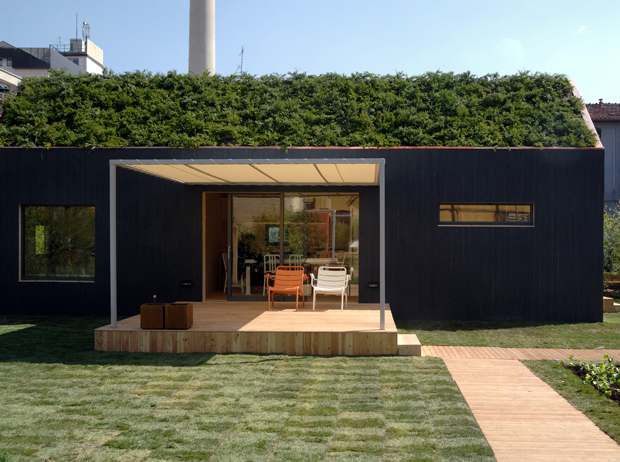
Below: a recent realisation of a domestic space in Higashi-Hiroshima, Japan. The architect (suppose Design Office) has designed the house for a young couple with children; the space has been conceived as a volume fragmented in separate cells, in which the family’s main functions are made autonomous and enhanced in their fundamental features, through an intermediate space called “Doma”, made of clay, in the balance between public and private, inside and outside. A bizarre realisation, which is the result of a collaboration between the designer’s fantasy and the buyer’s needs. The cover images of each article of the column will be selected from Taccuini, among the projects of architecture and interior furniture that offer the most interesting and innovative solutions as opposed to the archetypes of tradition.


more

Psychology and Feng-shui

 to understand the spaces we live


and better evaluate their holds
on our behaviours, mood, thoughts, health


Taccuini Internazionali begins a column dedicated to the architecture of the environmental micro-spaces in which we spend some of our time (internal or external, private or public, commercial or cultural, for work and for fun, housing or not). Our idea is to propose to the public our analysis, as much objective and as little trendy as possible, of these places and their features. We aim at showing their qualities and weak points in relation to their effect on the people who attend them, even occasionally, or live in them for a long time or briefly, both because they live, work or simply pass through there.


We are strongly convinced that, now more than ever, everything that is physically built in terms of environment in order to determine some spaces around us (as for architectures and places) is influenced by subjectivity and fashion. That is why we want to suggest to our readers a different approach of knowledge about these topics. This seems to have become a necessity, since it can help us understand, distinguish and realize what is wrapping and containing us, and surely influencing us. Such need is strengthened by a proclivity, which has recently occurred in the philosophical debate too, towards a strong realism in the analysis of all the concrete aspects of our lives: we need to understand how many positive effects can derive from a greater awareness about what we eat, what medicines we ingest, and also about the influence of everything that determines the aspect of our environment.
We think that this kind of approach to the themes of architecture, relevant to the small or big spaces we live, can involve a larger amount of people in a subject that is rarely handled by the individuals in first person, without any contribution of the experts; when it comes to all the issues involving the urban or territorial field, on the contrary, this becomes an “esoteric ” matter, which requires the contribution of people with specific competences. Not that this prevents all the non-experts from being interested in the physical conformation or in the aspect of their environment - whether we are talking about a district, a town or a territory - by adopting any possible mean of communication to draw the attention of those who are in some way responsible for its changes in the course of time.
It’s obvious that the environment in which we live and with which we are in contact the most has to be controlled the most, and it’s therefore useful to know the laws that govern its structure and aspect. The goal is to make it become congenial as much as possible, from the point of view of our physical but also mental health, since it must act positively on our mind, by bringing us satisfaction and keeping us away from stress and feelings of constriction.
We are convinced that very little attention has been given in the past to these problems, handled only by those who are numbered in books and manuals among the masters of ancient and modern architecture. Through their genius and the erudition acquired in the course of time, they have shown an ability to control the laws that have been governing everything that is beautiful, harmonic and appropriate for millennia, and they have managed to give to their spaces those qualities that have made them perfect not only from an aesthetic point of view, but also from a larger human perspective, physiological and psychological. Today, very little of what we see is created with this kind of awareness, especially when it comes to a big new building: the common mark is a subjectivity being an end in itself, or even the selfish initials of the artist, whose project didn’t care much about the surroundings or the deep and pure spirit of the place. But it’s only through a careful analysis of it, together with a deep knowledge of the processes and the general laws and principles at the base of its conformation, that we can bring identity and well-being to the ones who live in it.
The history that has contributed to the shape of a place can give a great explanation of it, together with many other factors of the critical praxis normally used in the West. A greater and wider knowledge can also be reached through the cognitive, philosophical and technical approach coming from the East.
Coming back to the topic we intend to deal with, we propose an article in which we analyze a few environments randomly selected, with the collaboration of Vanessa Passoni, scholar of Eastern Philosophy. We will talk about the two distinct paradigms of the western and eastern perspective and the different approach used in the observation of spaces, volumes, openings, spatial schemes determining the habitat, materials, colours and everything that contributes to influence the housing space.
We would be glad if the readers cut in on this theme and proposed in their turn some environments to be analyzed. We think that the use of practical examples can make  the understanding process towards a true and useful knowledge of the real even more interesting.

Enrico Mercatali


Feng-Shui
The environment in Yin-Yang’s School of Thought 


Everyone has happened to enter a beautiful room and yet feel physically uncomfortable. The eastern discipline called Feng-Shui studies these uneases and remedies them starting from the foundation, by choosing the right kind of ground for houses, temples, public and imperial buildings. To each typology of house the proper intake of Qi energy, to each rank the specific and adequate natural habitat.
When we use the Feng-Shui criteria for analyzing a western building it is also necessary to consider that the eastern weather conditions are different and so is our way of conceiving the construction. Some materials are easily accessible in the West but not in the East, and vice versa. To an habitat of some kind, materials more practical but less stable in case of displacement; to other habitats a more solid choice, made to last long. But the Feng-Shui discipline uses also some universal ground rules, which observe the course of seasons, of light and obscurity, of the shapes composing a room and their effect on the vitality of  Universal and Personal Qi.
The Universal Qi is the energy spontaneusly created in the Universe, towards which everyone is both generated and generative. It flows in the whole planet and we can never avoid it. It comes into our houses, goes across the streets, wanders around the mountains and the great seas, and gathers, then bringing it along, the information of everything it meets. Some places have a conformation that can control its flow, either for their architecture or geographical position, while in other ones it flows with more speed and energy of motion. Starting from the climate until the psychophysical condition of the individual, everything converges in the Qi and derives from it.
The personal Qi is, on the contrary, produced by the collaboration of body and mind.
The more harmony we are able to reach during this introspective process, the better energy we produce and the greater mental and physical efficiency we have at our disposal. The idea comes from the contrast between the forces called Yin and Yang. Two different poles showing similar and specular qualities and being inseparable by nature. Only the presence of Yin can allow the existence of Yang and vice versa, since the energy created by their eternal searching and disowning each other allows their reciprocal appearance. Like two magnets that attract and repel each other at the same time. Thanks to this perpetual motion, the more or less prevailing appearence of one polarity takes place.
A house where structural features are too Yang and the circulating Qi is very strong, will drain with fever the energies of its inhabitants’ Personal Qi and will contribute to create a state of psychological stress. A house whose features are too Yin and whose Qi is weak, on the contrary, will tend to produce physical pathologies linked to a state of depression caused by the excessive stagnation. The difference between the various states of interaction between Yin and Yang allows to suggest some of them for some activities instead of others. A bedroom must have some Yin features at its base, in order to allow the right control and contribution of incoming Yang, and become a real place of complete physical and mental regeneration. When a structural deficiency occurs, an evaluation of the room might be necessary, so that the colours and shapes of the furniture can balance the relation between Universal and Personal Qi.
The greatest eastern Feng-Shui masters walk into houses and analyze on themselfes the effect perceived from the present Qi. They judge if it is too strong, stagnant or mild. The observation and physical perception of different places will help them find a solution to convey it at best.
A round shape, instead of a triangular one, will increase the activity of Yin rather than Yang. The right choice of shapes and sizes, the setting of lights and shadows can create a remarkable difference of comfort if the spaces are handled following these criteria.

In these short analyses we will try to catch the sense of motion and the effects produced by the Qi inside the spaces here proposed.

Vanessa Passoni


The column, entitled “Capire gli spazi che viviamo” (“To understand the spaces we live”), will continue on this magazine with articles displaying through pictures many different kinds of environments. They will be followed by our analytical observations concerning the configuration of the spaces, the materials used, the clear and implied figurative references, the energy released from these and other factors, which can either satisfy our needs or contrast them, thus determining depressive states or out-and-out pathologies.

We are showing below some images relative to as many environments. They will be proposed to the attention of our readers in the next articles:


The images selected above will be inserted in the next article and analyzed by Taccuini. They show some anonimous environments, coming from the pages of specialized trade magazines (interiors, design, furnishing, villas and yards) and some hyper-published environments, designed by the masters who have made the history of architecture. We will not indicate the authors, allowing your knowledges and abilities to identify them. The observations that will be proposed, and the particular interpretation of Enrico Mercatali and Vanessa Passoni in the next pages of the magazine, might happen to be even more positive towards anonimous and randomly selected environments than towards the ones that have been allowed by the great international critics to enter the history of architecture.


Enrico Mercatali and Vanessa Passoni
Milan, 27th June 2012
(29 July 2012, translation from italian by Penelope Mirotti)